Tinnitus is genuinely miserable, and that makes it a target for overclaiming. This page covers what RingZen6 contains, what the evidence for supplements in tinnitus actually shows — which is not much — and what it costs, so you can decide with clear eyes.
Check Today’s Price See Packages

Drops under the tongue or in water — no capsules, flexible dosing.
Two inclusions with genuine relevance to nerve and inner-ear function.
Produced in an FDA-registered, GMP-certified US facility.
One-time payment, with free shipping and two bonuses on multi-bottle orders.
The honest framing this category usually avoids: no supplement is an established treatment for tinnitus, and the best-studied botanical in this space — ginkgo biloba — was found by a Cochrane review to have uncertain evidence and no demonstrated benefit. Marketing that invokes “Nobel Prize neuroscience” for a dropper bottle is selling, not informing.
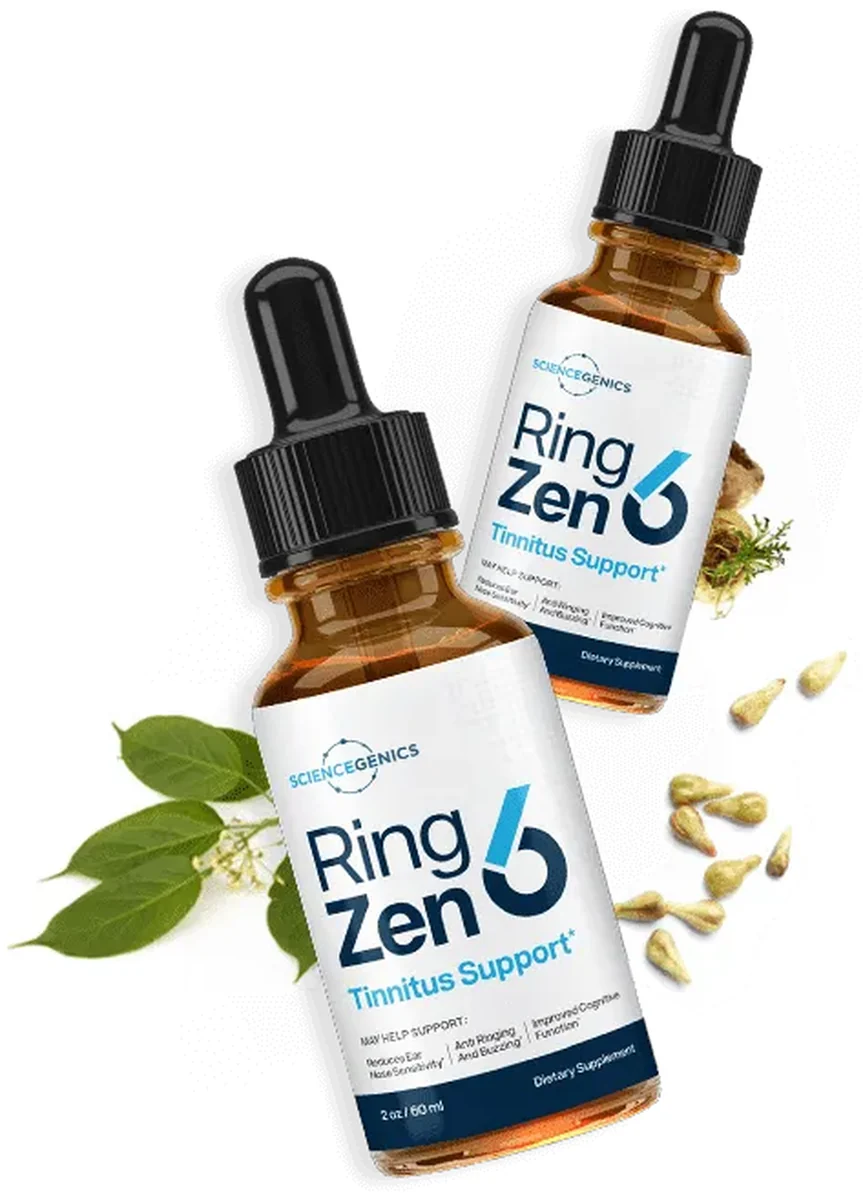
RingZen6 is a liquid supplement taken by dropper, marketed for ear and hearing wellness — which in practice means people with tinnitus, that ringing, buzzing or hissing with no external source. Its blend includes grape seed, maca root, astragalus, gymnema, eleuthero and coleus alongside magnesium and vitamin B12.
We want to be useful rather than flattering here, because tinnitus is a condition where desperation is common and overclaiming is rampant. There is no supplement with established efficacy for tinnitus. A Cochrane review of ginkgo biloba — the most studied botanical in this area by a wide margin — concluded the evidence was uncertain and did not demonstrate benefit. Nothing in this formula has a stronger file than ginkgo.
What the ingredients can reasonably support is narrower and more plausible: circulation, nerve function and stress. Magnesium and B12 deficiency both have genuine links to auditory function, poor blood flow to the inner ear is a real contributor for some people, and stress reliably makes tinnitus louder. That is a legitimate wellness rationale — it is just not a cure, and you deserve to be told the difference before you spend anything.
| Product type | Ear and hearing wellness supplement (liquid drops) |
| How to take | Dropper under the tongue or mixed into water, daily |
| Key components | Grape seed, maca, astragalus, gymnema, eleuthero, coleus, magnesium, vitamin B12 |
| What the evidence shows | No supplement is an established tinnitus treatment — see the references section |
| Amounts disclosed | No — confirm the supplement facts panel on the official label |
| Price | $69 (1) · $177 (3) · $294 (6) |
| Guarantee | 60-day money-back |
| Where to buy | Official website only |
Sold through the official website only. One-time payments, with free shipping and two bonus guides on the 3 and 6-bottle packages.

Prices and bonuses shown were listed on the official order page when this page was last reviewed and are set by the seller. Confirm the package, total, shipping and the 60-day refund terms on the final order screen before paying.
Three plausible supporting mechanisms — described at the level the evidence actually supports.
The inner ear depends on a tiny, fragile blood supply, and reduced flow is one recognised contributor to tinnitus in some people. Grape seed proanthocyanidins and coleus have circulatory research behind them — a plausible supporting role, not a demonstrated tinnitus effect.
Magnesium and vitamin B12 are the most defensible inclusions. Both deficiencies have documented associations with auditory problems, and correcting a genuine deficiency is a real intervention — which is exactly why asking your doctor to check your B12 level is more useful than guessing.
This one matters more than it sounds. Stress reliably makes tinnitus louder, and louder tinnitus raises stress — a self-feeding loop. Adaptogens like astragalus, eleuthero and maca are traditionally used for stress resilience, and anything that softens that loop can genuinely make tinnitus less intrusive, even without changing the sound itself.
What is in the bottle, with each ingredient's real evidence stated — including how little exists for tinnitus specifically.
The most defensible ingredient here. Magnesium has documented roles in nerve function and inner-ear physiology, with research interest in noise-induced hearing protection, and a meta-analysis supports its blood pressure effects — relevant since circulation matters to the inner ear. Many adults are genuinely short of it.
B12 deficiency has documented associations with tinnitus and auditory nerve problems, and it is common in older adults, vegetarians and anyone on long-term metformin or acid-reducing medication. The practical advice this implies is better than any supplement pitch: ask your doctor to test your B12 level — if it is low, correcting it properly is a real intervention.
Proanthocyanidins with human research in endothelial function and blood pressure. The inner-ear circulation rationale is plausible, and grape seed is a reasonable ingredient for it — but no trial has shown it reduces tinnitus.
Studied for its effects on cellular signalling and vascular tone. It appears in this category on a blood-flow rationale. Evidence in ear conditions specifically is absent.
Traditional adaptogens used for stress resilience and energy. Their relevance here is indirect but real: stress amplifies tinnitus perception, and anything that reduces stress can make the sound less intrusive. That is a modest, honest claim — and more defensible than most in this category.
Genuinely researched — but for blood sugar, where it reduced fasting glucose and HbA1c in a long-term study. Its presence in an ear formula reflects the shared adaptogen-and-metabolic panel these liquid supplements tend to use, rather than any tinnitus-specific rationale. Worth knowing if you take diabetes medication, since gymnema lowers glucose.
Context that belongs on every tinnitus supplement page: a Cochrane systematic review of ginkgo biloba — the most studied supplement for tinnitus — found the evidence uncertain, with no demonstrated benefit over placebo. Nothing in RingZen6 has been studied for tinnitus as thoroughly as ginkgo has, which should calibrate expectations for the whole category.
Each is a possibility rather than a promise, and none has been demonstrated with the finished product. “Silences tinnitus” and “repairs hearing” are deliberately absent — no supplement has been shown to do either.
Grape seed and coleus support blood flow — a plausible contributor for some people's tinnitus, though unproven for it.
Magnesium and B12 have real roles in nerve and auditory function, particularly where intake is low.
The most realistic benefit — calmer days often mean tinnitus feels less intrusive, even unchanged.
Magnesium is commonly reported to help sleep, and tinnitus is usually at its worst in a quiet bedroom.
Drops are simple to keep up, with no capsules to swallow and adjustable dosing.
With a 60-day guarantee, testing it costs time and attention rather than money — which is the right frame for this category.
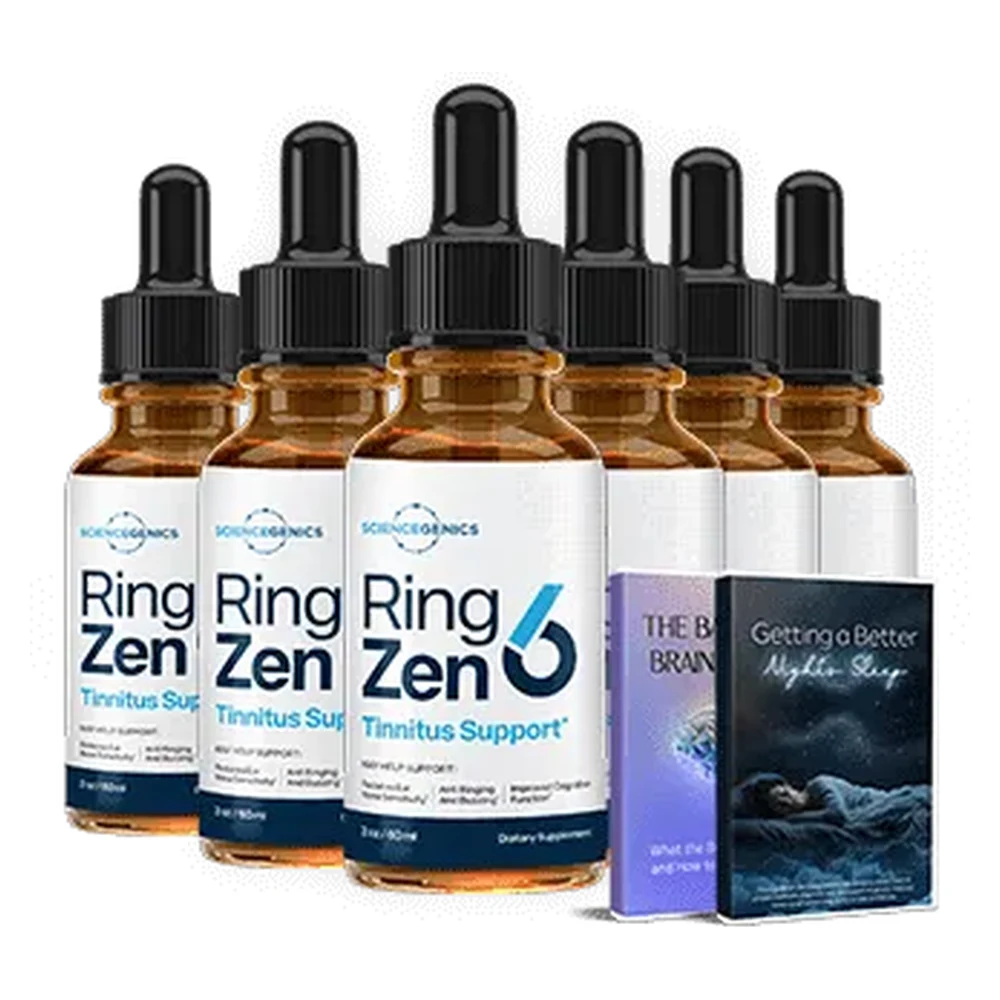
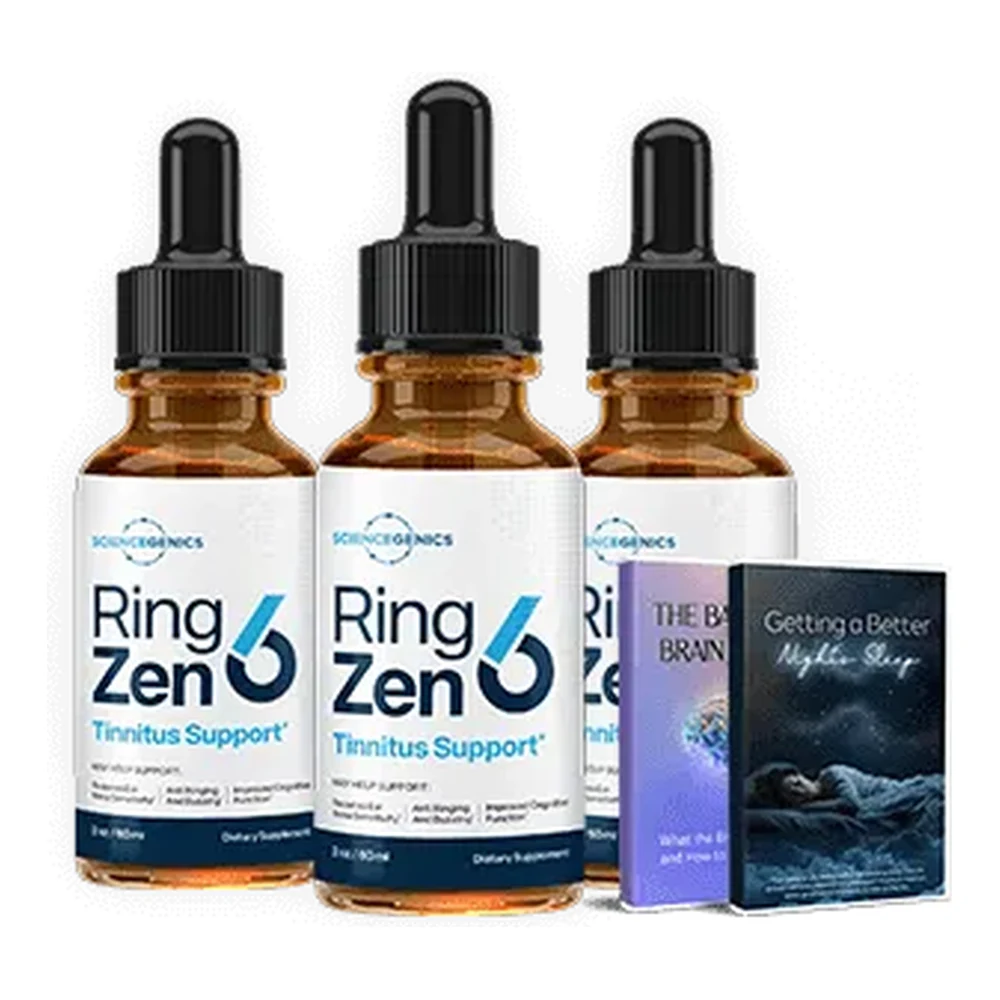
The 3 and 6-bottle packages include two digital guides at no extra cost, alongside free shipping.


These are digital guides delivered after purchase. For tinnitus specifically, the approaches with real evidence — sound therapy, CBT and hearing aids where hearing loss is present — matter far more than any bonus e-book.
Three themes recur in buyer feedback: the people who report benefit describe the ringing as less bothersome rather than gone, sleep and stress changes come first, and expectations set by the marketing are frequently not met — which is why we set them differently here.
“Straight answer: the ringing is still there. What has changed is that it bothers me less, mostly because I am sleeping better, which I put down to the magnesium. My audiologist had already fitted hearing aids and told me those do more for tinnitus than anything in a bottle — she was right, but this sits alongside them fine.”
Walter H., 64 — Ohio
“I appreciated that my doctor checked my B12 first — it was low, and correcting that properly seemed to matter more than anything else. The drops are easy and I have kept them up. Four stars with a caveat: if you read the sales pages expecting silence, you will be let down. Managing expectations is half the battle with tinnitus.”
Marion E., 57 — Oregon
“I tried this after two other tinnitus supplements. It is the easiest to take and no side effects, but I am honest enough to say the biggest improvement in my life came from the sound-therapy app and CBT my doctor recommended. This is a supporting act, and anyone telling you a dropper cures tinnitus is not being straight with you.”
Gary L., 61 — Texas
Testimonials are illustrative and not typical. Individual results vary, and no outcome is guaranteed.
From about $1.63 a day on the six-bottle package, with free shipping, two bonus guides and 60 days to change your mind.
One-time payment · No subscription · Secure checkout
Sixty days from purchase on official-website orders — which matters in this category more than most, because honest assessment of tinnitus change takes weeks and many people will conclude it is not for them.
The maker describes a straightforward refund on contacting support within the window. Keep your order confirmation email — it carries the order number. Use the guarantee without hesitation if the drops have not earned their place; that is exactly what it is for.
Tinnitus has causes worth finding: earwax, medication side effects, hearing loss, blood pressure, thyroid problems, and rarely something needing urgent attention. Sudden, one-sided or pulsating tinnitus, or tinnitus with hearing loss or dizziness, needs prompt assessment.
Far more useful than guessing. If either is genuinely low, correcting it properly is a real intervention with real evidence — and if they are normal, you have learned something useful about what this formula can offer you.
Current pricing, both bonus guides, free multi-bottle shipping and the 60-day guarantee apply only there.
Sound therapy, cognitive behavioural therapy and hearing aids where hearing loss is present are the approaches with genuine support for tinnitus distress. A supplement sits alongside those, never instead of them.
RingZen6 is sold through the official website only. Listings under the name on Amazon, Walmart or eBay are unauthorised resellers or counterfeits, outside the 60-day guarantee.
Tinnitus is a category that attracts opportunists precisely because people are desperate for relief. Buy from the official source so the guarantee is real — and treat any seller promising to cure or silence tinnitus, on any platform, as disqualified by the claim itself.
Secure your RingZen6 package while the current pricing holds. Official website only, one-time payment, with free shipping and both bonus guides on the multi-bottle bundles.

RingZen6 is a liquid supplement taken by dropper, marketed for ear and hearing wellness. Its blend includes grape seed extract, maca root, astragalus, gymnema, eleuthero and coleus alongside magnesium and vitamin B12. It is made in an FDA-registered US facility and sold with a 60-day money-back guarantee.
No, and no supplement does. There is no supplement with established efficacy for tinnitus. A Cochrane systematic review of ginkgo biloba — by far the most studied botanical in this area — found the evidence uncertain and did not demonstrate benefit over placebo. Nothing in RingZen6 has been studied for tinnitus as thoroughly as ginkgo. Treat any page promising to silence or cure tinnitus as marketing, and judge this product as wellness support instead.
Through three plausible supporting routes rather than a proven mechanism. Circulation: the inner ear depends on a fragile blood supply, and grape seed and coleus have circulatory research. Nerve support: magnesium and B12 have documented roles in auditory and nerve function. And stress: adaptogens target the loop where stress makes tinnitus louder and louder tinnitus raises stress — softening that loop can genuinely make the sound less intrusive.
Promptly, if your tinnitus is sudden in onset, in one ear only, pulsating in time with your heartbeat, or accompanied by hearing loss, dizziness or discharge. Those patterns can point to causes that are treatable or occasionally urgent. Even for ordinary persistent tinnitus, an assessment is worthwhile: earwax, medication side effects, hearing loss, blood pressure and thyroid problems are all findable causes, and some are fixable.
Grape seed extract, maca root, astragalus, gymnema, eleuthero, coleus, magnesium and vitamin B12, in a liquid base. Per-ingredient amounts are not published in the available materials, so read the supplement facts panel on the official page before buying — particularly if you take medication. Note that gymnema lowers blood glucose, which matters if you are diabetic.
From the official order page: one bottle is $69 plus shipping, three bottles are $177 ($59 per bottle, 90-day supply) and six bottles are $294 ($49 per bottle, 180-day supply) — about $1.63 a day. The multi-bottle packages include free shipping and two bonus guides. All one-time payments; confirm the total at checkout.
Give it six to eight weeks of consistent daily use, and judge it on the right measure. The realistic question is not “has the sound stopped” but “is it bothering me less, and am I sleeping better” — those are the changes people who benefit actually report. Keep a brief weekly note; memory for tinnitus severity is unreliable. The 60-day guarantee covers this window.
The ingredients are generally well tolerated; mild digestive upset is the most common report. Two interactions are worth knowing: gymnema lowers blood glucose, so anyone on diabetes medication should consult a doctor, and magnesium can add to blood-pressure-lowering medication. Because per-ingredient amounts are not published, read the actual label first if you have allergies or take anything regularly.
Yes, and it may be the most useful thing on this page. B12 deficiency has documented associations with tinnitus and auditory nerve problems, and it is common in older adults, vegetarians, and people on long-term metformin or acid-reducing medication. If your level is low, correcting it properly under medical guidance is a real intervention with real evidence — far better than hoping a blend contains enough.
The approaches with genuine evidence are sound therapy (masking or habituation), cognitive behavioural therapy for tinnitus distress, and hearing aids where hearing loss is present — often strikingly effective, since amplifying real sound reduces the brain's attention to the phantom one. Treating identified causes matters too. A supplement, at best, sits alongside these.
No — no dietary supplement is FDA approved. Supplements are regulated as food without pre-market efficacy review, which is precisely why claims in this category go unchecked. RingZen6 is made in an FDA-registered, GMP-certified US facility — a manufacturing standard, not an endorsement of effectiveness.
Sixty days from purchase through the official website's support channel — also the only place current pricing, the bonus guides and free multi-bottle shipping apply. Keep your confirmation email for the order number, and use the guarantee without hesitation if the drops have not earned their place. Marketplace listings are unauthorised and outside the guarantee.
Real, verifiable PubMed records covering ingredients in this formula. None tested RingZen6 itself.
Regular Price: $99/per bottleToday: $49/per bottle
On the 6-bottle package · About $1.63 a day · Free shipping + 2 bonuses · 60-day guarantee
Get Your Discount NowOne-time payment · No subscription · 60-day money-back guarantee
The four things that decide it, side by side.
Magnesium and B12 have real relevance to nerve and auditory function, and the stress angle is legitimate — calmer days genuinely make tinnitus less intrusive.
No supplement is an established tinnitus treatment. Cochrane found the evidence for ginkgo — the most studied option — uncertain and unproven. Nothing here has a stronger file.
Neuroscience-flavoured cure talk does not survive contact with the evidence. Judge this as wellness support, not as a treatment, and you will not be misled.
See a doctor first. Get B12 checked, rule out treatable causes, and pair anything you try with sound therapy, CBT or hearing aids — the approaches with genuine evidence.
The verdict — 4.8/5: a decent product in a category that rarely deserves the benefit of the doubt — and our rating reflects how it is built and sold rather than any proven effect on ringing. The sensible inclusions are real: magnesium and B12 matter to nerve and auditory function, the circulation rationale is plausible, and the stress angle is the most honest benefit here, because tinnitus that bothers you less is a genuine improvement even when the sound is unchanged. What we will not do is pretend the evidence is better than it is: no supplement has been shown to treat tinnitus, and the best-studied one failed to demonstrate benefit in a Cochrane review. At about $1.63 a day with a 60-day guarantee, a trial is low-risk — but see a doctor first, get your B12 checked, and put sound therapy and CBT ahead of any bottle.